By Krystle Alves | Naturopath, Nutritionist & Yoga Therapist | B.HSc, Adv. Dip. Naturopathy
For decades, endometriosis was explained by a single theory: retrograde menstruation. Menstrual blood flows backwards through the fallopian tubes, endometrial cells land outside the uterus, and the disease takes hold from there. It was a tidy hypothesis. It also left most of the important questions unanswered.
Why do most people experience some retrograde menstruation but only around 10% develop endometriosis? Why does disease severity correlate poorly with symptom severity? Why do some people spend years in pain before a diagnosis, while others have extensive disease with almost none? And why does endometriosis so often travel with a constellation of other conditions: irritable bowel syndrome, autoimmune disease, chronic fatigue, anxiety, thyroid disorders?
The research has moved. The current understanding of endometriosis is far more complex than a mechanical problem with menstrual flow. It is now increasingly understood as a systemic, inflammatory, immune-mediated condition with multiple contributing drivers that extend well beyond the reproductive system. Here's what the evidence is currently pointing toward.
The Gut Microbiome: A Pivotal Piece of the Picture
One of the most rapidly developing areas of endometriosis research is the relationship between the gut microbiome and disease development and progression. The findings are striking.
People with endometriosis show consistent patterns of gut microbiome dysbiosis, a shift in the composition of bacterial communities that disrupts the microbiome's normal regulatory functions. Specifically, research has identified elevated levels of Proteobacteria and Escherichia coli alongside significantly reduced populations of Lactobacillus and short-chain fatty acid-producing commensal bacteria. This is not a subtle finding. It reflects a meaningful disruption to a system that plays a central role in immune regulation, estrogen metabolism, and inflammation, all three of which are core to endometriosis pathology.
How dysbiosis drives inflammation. When the bacterial balance in the gut is disrupted, the integrity of the gut lining is compromised. Tight junction proteins, the structures that keep the intestinal barrier sealed, decline, and permeability increases. Bacterial components, including lipopolysaccharides (LPS) from gram-negative bacteria like E. coli, pass into the bloodstream. LPS triggers a sustained inflammatory cascade, placing the body in a state of low-grade systemic inflammation. That chronic inflammatory environment is increasingly recognised as one of the key conditions that allows endometrial lesions to implant, survive and grow in locations outside the uterus.
The estrobolome. The gut microbiome contains a specialised community of bacteria the estrobolome, that directly regulates estrogen metabolism. These bacteria produce an enzyme called beta-glucuronidase, which deconjugates estrogen in the gut, allowing it to be reabsorbed into circulation rather than excreted. When the estrobolome is dysregulated, this deconjugation process becomes dysregulated too; estrogen recirculates at higher levels than it should, contributing to the estrogen dominance that fuels endometriosis progression. This creates a bidirectional problem: endometriosis is estrogen-dependent, and gut dysbiosis elevates estrogen, which in turn feeds the disease.
Immune dysregulation from the gut. The gut houses approximately 70% of the body's immune tissue. A dysbiotic gut impairs immune surveillance, reduces the capacity to clear aberrant cells and tissue, and promotes a pro-inflammatory immune phenotype. Current research specifically implicates impaired immune clearance of endometrial fragments and the immune system's failure to recognise and eliminate these cells as a key step in disease establishment.
A 2025 systematic review and meta-analysis in Frontiers in Microbiology confirmed the association between endometriosis and gut microbiome dysbiosis across multiple studies, identifying this relationship as one of the most active and evidenced areas in endometriosis research.
The Uterine Microbiome: Emerging, But Significant
Until recently, the uterus was considered a sterile environment. That assumption has been overturned. The uterus has its own microbiome and early evidence suggests it may be altered in people with endometriosis.
Research is still early in this space: a 2025 systematic scoping review published in Human Reproduction Open analysed 36 papers and found that studies specifically examining the uterine fluid microbiome in endometriosis had small sample sizes (some as few as eight participants), making firm conclusions difficult. The honest position here is that the evidence is suggestive but not yet definitive.
What has been observed is that a Lactobacillus-dominant uterine microbiome appears to be associated with better reproductive and inflammatory outcomes, while an altered uterine microbiome, with reduced Lactobacillus and increased diversity of other bacterial species, is found in a proportion of people with endometriosis and associated infertility.
The vaginal and cervical microbiomes have also been examined, and dysbiosis at these sites again, often characterised by reduced Lactobacillus, has been associated with increased susceptibility to gynaecological inflammatory conditions including endometriosis.
This is a rapidly evolving area and the research will strengthen considerably over the coming years. What we can say now is that the concept of "local microbiomes" across the reproductive tract matters, and that maintaining a healthy Lactobacillus-dominant environment throughout those sites is likely to be clinically relevant.
Hormonal Drivers: More Than Just Estrogen
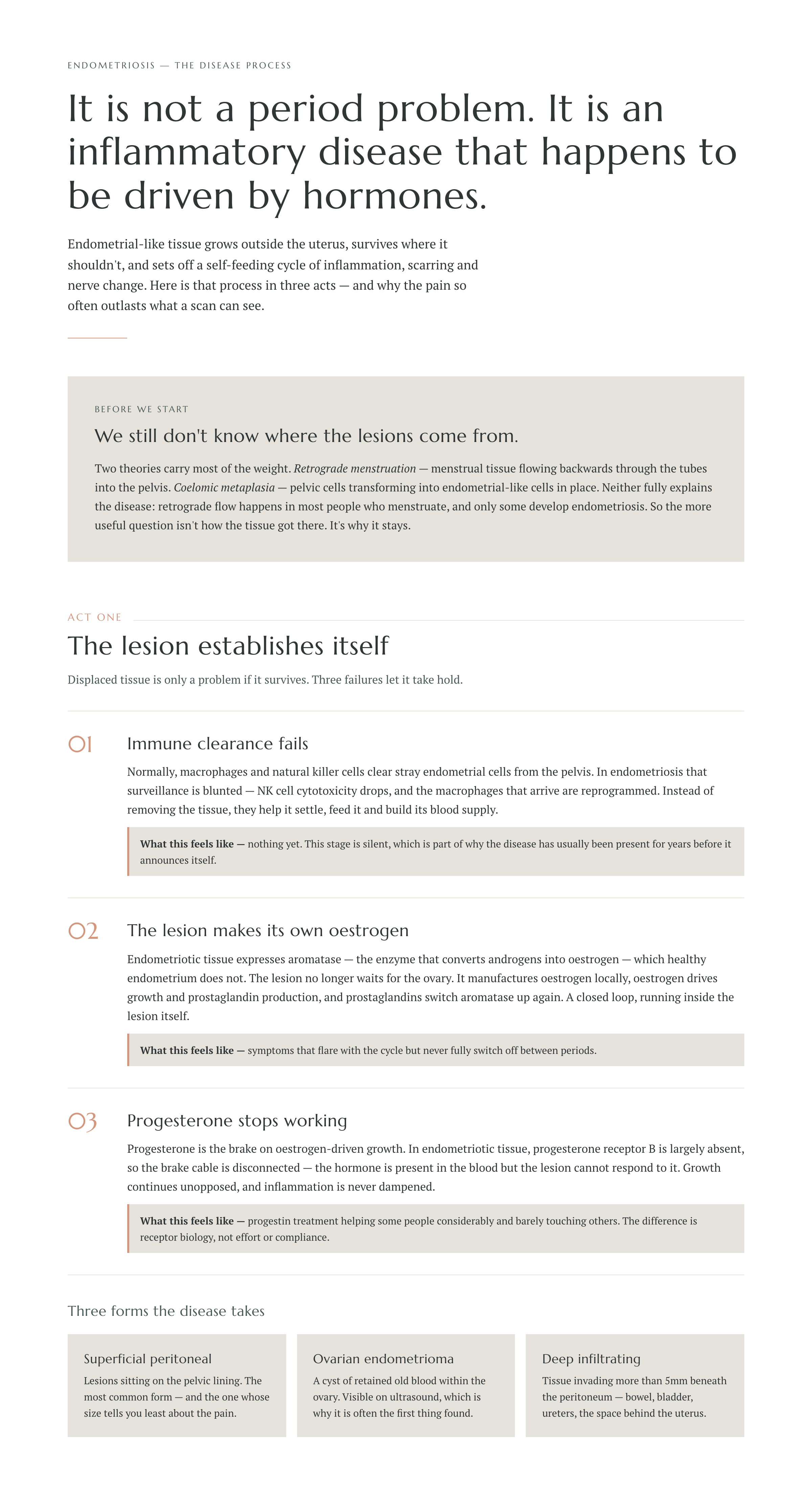
Endometriosis is classified as an estrogen-dependent condition, and that classification is accurate, but it's worth unpacking what that actually means and where the complexity sits.
Estrogen as fuel. Endometriotic lesions express aromatase, an enzyme that enables them to produce their own estrogen locally, independent of ovarian production. This means endometriotic tissue can, to some extent, sustain itself a feature that partly explains why the disease can persist or progress even when systemic estrogen levels are managed.
Progesterone resistance. Endometriotic tissue typically shows impaired responsiveness to progesterone. Progesterone normally opposes estrogen's proliferative effects in the endometrium, promoting differentiation and the shedding of tissue in an orderly way. When that progesterone response is blunted as it is in endometriosis estrogen's proliferative drive goes largely unopposed. This is why hormonal interventions that rely solely on progesterone suppression don't consistently resolve symptoms: the tissue isn't responding to the signal in the expected way.
The estrogen clearance pathway. Estrogen is metabolised through the liver and eliminated via the gut. Impaired liver detoxification (driven by factors like nutrient depletion, toxic load, or alcohol) and gut dysbiosis (via the estrobolome mechanisms described above) both compromise estrogen clearance. The result is higher circulating estrogen exposure over time the same exposure that drives lesion growth and symptom severity.
Oxidative stress and ferroptosis. More recent research has identified oxidative stress as a significant contributor to endometriosis pathology. Haem iron from menstrual blood accumulates in the peritoneal cavity and drives the production of reactive oxygen species. This oxidative environment damages surrounding tissue, promotes inflammation, and may contribute to a cell death pathway called ferroptosis which paradoxically can promote the survival and proliferation of endometriotic cells. This is an active area of research with therapeutic implications that are still being defined.
Chronic Inflammation and Immune Dysfunction
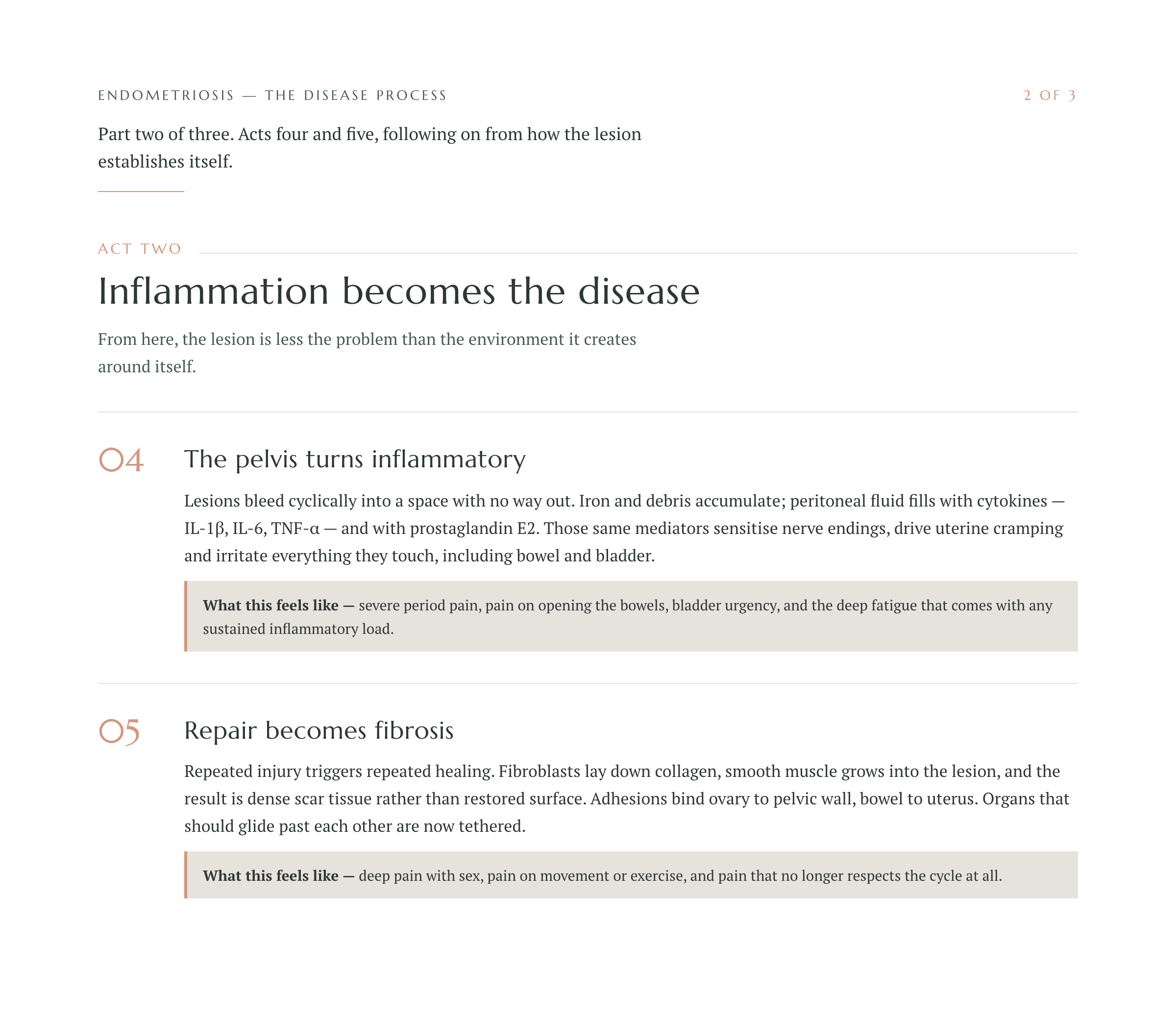
Endometriosis is, at its core, an inflammatory disease. And the inflammation is not localised it is systemic.
People with endometriosis demonstrate elevated peritoneal and systemic levels of pro-inflammatory cytokines, impaired natural killer cell activity, altered macrophage function, and dysregulated T-cell responses. This immune dysfunction serves the disease in a specific way: it allows endometrial cells to evade immune clearance, establish implants in ectopic locations, and develop a blood supply that sustains their growth.
What drives the immune dysfunction? The evidence points to several interacting factors: gut microbiome disruption, elevated LPS-mediated inflammation, chronic HPA axis activation, oxidative stress, and potentially epigenetic changes that alter immune gene expression. These are not independent pathways they amplify each other.
Importantly, this chronic inflammatory state also explains why endometriosis so frequently co-occurs with other inflammatory and autoimmune conditions. A systemic inflammatory environment does not limit itself to one organ or system.
The HPA Axis, Stress, and the Neuroendocrine-Immune Connection
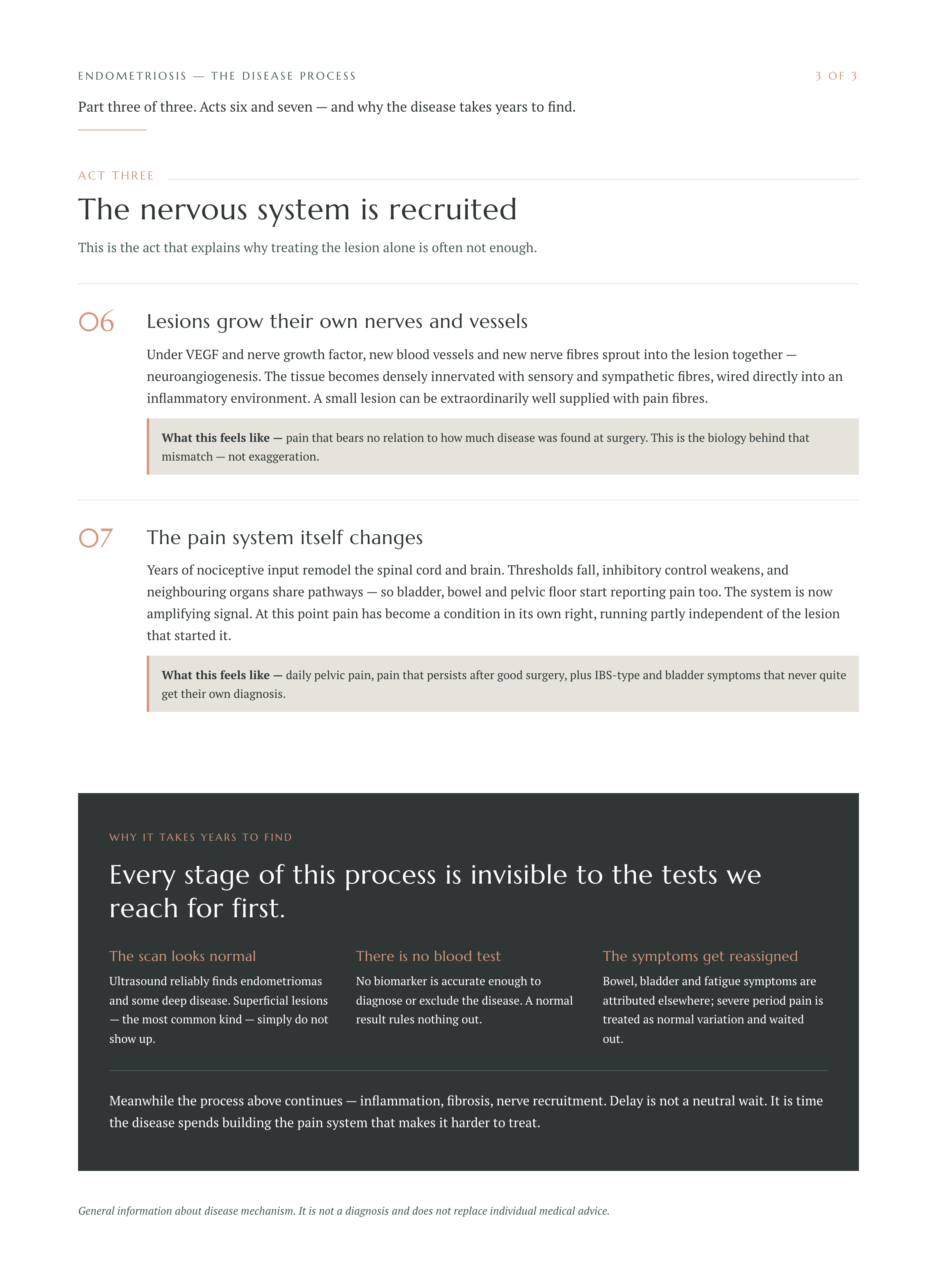
This is one of the most underappreciated dimensions of endometriosis and one that research is now addressing directly.
The hypothalamic-pituitary-adrenal (HPA) axis is the body's central stress-response system. Under conditions of chronic stress, repeated activation of the HPA axis leads to neuroendocrine dysfunction: an abnormal and sustained increase in cortisol and other stress hormones that dysregulates immune function and alters the local microenvironment in ways that promote endometriosis development and progression.
A 2025 review published in PMC under the title Neuroendocrine–Immune Axis in Endometriosis made this relationship explicit. The review identified that dysregulation of the HPA axis and elevated cortisol levels exacerbate inflammation and pain sensitivity in endometriosis, creating a documented feedback loop: pain activates the stress response, the stress response amplifies pain sensitivity, and heightened cortisol further impairs immune regulation.
There is also a more direct biological pathway: corticotropin-releasing hormone (CRH), the signal at the top of the HPA axis cascade, has been found at elevated levels in endometriotic lesions themselves. Research published in 2025 demonstrated that blocking the CRH receptor 1 (CRH-R1) reduced endometriosis lesion size and associated adhesions in animal models a finding that points toward the HPA axis as an active participant in disease biology, not merely a downstream responder to pain.
The sympathetic nervous system (SNS) is also implicated. Chronic SNS activation the physiological counterpart of sustained psychological or physical stress promotes immune dysfunction and the local inflammatory microenvironment changes that allow endometriosis to establish and persist.
What this means clinically is that the nervous system is not simply responding to endometriosis. It is, in a meaningful sense, participating in it.
Epigenetics and Environmental Factors
The research on epigenetic contributions to endometriosis is growing, though still emerging. The core finding is that environmental exposures, including persistent organic pollutants, endocrine-disrupting chemicals (EDCs), and potentially dietary factors, can alter gene expression in ways that promote the hormonal and immune dysregulation seen in endometriosis.
Dioxins and dioxin-like compounds have received particular research attention. These persistent environmental chemicals disrupt estrogen signalling, promote inflammation, and have been shown in animal models to increase endometriosis susceptibility and severity. Exposure is primarily dietary (fatty animal products, fish) and largely unavoidable at a population level but it is part of a broader picture of environmental load that may modify individual risk.
What This Research Picture Means
The research is converging on an understanding of endometriosis as a whole-system condition with multiple interacting drivers: a dysbiotic gut amplifying inflammation and estrogen load; a disrupted reproductive tract microbiome; hormonal patterns that sustain and fuel lesion growth; immune dysfunction that allows the disease to establish and persist; and a neuroendocrine stress axis that both reflects and amplifies the cycle.
This is not an argument against hormonal or surgical interventions where they are indicated. But it does suggest that addressing endometriosis through a single pathway suppressing ovarian function- or managing pain symptomatically will consistently produce incomplete results when the underlying systemic drivers remain unaddressed.
The most clinically coherent approach is one that accounts for all of these systems simultaneously: the gut, the hormonal environment, the immune system, and the nervous system.
If you are living with endometriosis and feel like your management isn't reaching the whole picture, that instinct is likely correct.
Investigating the Drivers Clinically
Understanding the research is one thing. Translating it into something clinically actionable for an individual is another, and that requires more than a standard blood panel.
In my practice, when working with patients with endometriosis, I use a combination of advanced functional testing to gain direct insight into the key systems the research has implicated:
Advanced microbiome screening provides a detailed picture of gut bacterial composition, including the specific dysbiosis patterns associated with endometriosis, the status of the estrobolome, markers of intestinal permeability, and the presence of inflammatory bacterial species. This goes considerably beyond what a standard stool test detects.
DUTCH hormone testing (Dried Urine Test for Comprehensive Hormones) maps estrogen metabolism in detail, showing not just estrogen levels but how estrogen is being broken down and through which pathways, progesterone status, androgen levels, and markers of hormonal oxidative stress. This level of detail is critical in endometriosis because the estrogen metabolite profile, not just total estrogen, determines much of the downstream inflammatory burden.
Cortisol rhythm testing assesses the diurnal cortisol pattern the rise and fall of cortisol across the day which reflects HPA axis function directly. Given that chronic HPA axis dysregulation is now documented as both an amplifier of inflammation and a driver of pain sensitisation in endometriosis, understanding where someone's cortisol rhythm is sitting provides essential context for their symptom picture.
Genetic reports provide insights into individual variations in estrogen metabolism pathways (including COMT and CYP enzyme variants), inflammatory tendency, methylation capacity, and detoxification, all of which influence how a person's biology interacts with the hormonal and inflammatory drivers of endometriosis.
When this kind of functional assessment is deployed alongside the surgical and hormonal support that a gynaecologist may recommend, it may support better patient outcomes by addressing the systemic drivers that surgical or hormonal intervention alone does not reach. Rather than working in parallel to medical management, it works with it, filling in the gaps that standard care, by its nature, is not designed to address.
If you are living with endometriosis and want to understand what is driving your individual presentation, this is the kind of investigation that may provide meaningful answers.
This post is for educational purposes only and does not constitute medical advice. If you have endometriosis or suspect you may, please consult a qualified health practitioner for personalised assessment and support.
Krystle Alves is a naturopath, nutritionist and yoga therapist with over 17 years of clinical experience. She works with clients navigating complex, chronic, and inflammatory conditions including endometriosis. Consultations are available via telehealth Australia-wide. Book a consultation →
References:
Frontiers in Cellular and Infection Microbiology (2025). Gut microbiota as a key regulator in endometriosis: mechanisms, therapeutic opportunities, and future perspectives. PMC12901425
Frontiers in Microbiology (2026). Gut microbiota dysbiosis in endometriosis: mechanistic insights and gut microbiota-targeted therapeutic strategies. PMC13278937
Frontiers in Microbiology (2025). Association between endometriosis and gut microbiota: systematic review and meta-analysis. Link
Human Reproduction Open (2025). Microbiome dysbiosis and endometriosis: a systematic scoping review of current literature and knowledge gaps. PMC12596503
PMC (2025). Neuroendocrine–Immune Axis in Endometriosis: A Review on How the Nervous System Goes Beyond Pain Perception. PMC12650026
PMC (2025). Hormonal Dysregulation and Neuroinflammation in Endometriosis: Convergent Druggable Pathways. PMC13206118
PMC (2025). Antagonizing the corticotropin-releasing hormone receptor 1 with an orally bioavailable drug reduces endometriosis pain and associated adhesions. PMC13482287
European Journal of Endocrinology (2025). Endocrine aspects of endometriosis. Link