
Anxious Foggy & Overwhelmed…
And told everything is fine?
What is it?Perimenopause
ADHD
PMDD
Insomnia

You are managing, but it’s costing everything you have.
You are performing at work, but it is taking more time than it should. You forget words mid-sentence. You start things and cannot finish them. You lie awake with a mind that will not shut off, not because anything is wrong, but because the off-switch has stopped working.
Your threshold has dropped. Small things feel enormous. You are not the person you were two years ago, and you cannot explain why.
You have been told it is stress. You need to slow down. That your blood results are normal. But something has changed.
THE QUESTION NOBODY IS ASKING…
Is It Anxiety, Hormones, ADHD, Or All Three At Once?
Together, we outline a path forward that’s realistic, strategic, and tailored to your specific needs.
This is the question most practitioners are not equipped to answer, because it sits across multiple systems simultaneously.
The anxiety that has appeared from nowhere, or worsened significantly, is frequently driven by progesterone decline, the brain's natural calming hormone. When progesterone drops, the nervous system loses its primary buffer.
The brain fog, poor focus, and word-finding difficulties are frequently driven by oestrogen, which governs dopamine production and cognitive function. When oestrogen fluctuates, so does the neurochemistry that focus depends on.
The ADHD question is clinically significant. Many women who were quietly managing neurodivergent traits for decades find that hormonal transition removes the neurological scaffolding that was holding everything together. What looks like new-onset ADHD is frequently oestrogen-driven dopamine insufficiency, and it responds to hormonal investigation, not an ADHD diagnosis.
The circulating thoughts, the poor sleep, the emotional reactivity, these are measurable biological states. Not character flaws. Not stress responses to manage harder. Biological signals with identifiable drivers.
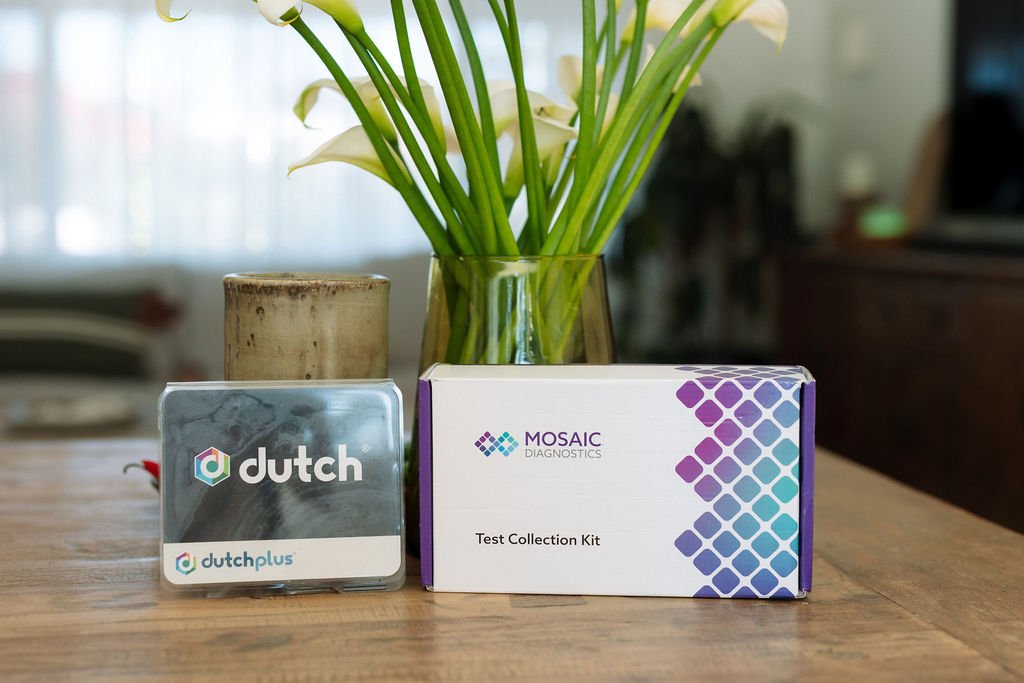
We investigate: DUTCH complete hormone panel, neurotransmitter markers, cortisol pattern, comprehensive blood pathology, gut microbiome, MTHFR and COMT genetic variants.
What could actually be driving this?
-
Anxiety that has appeared or worsened without a clear psychological trigger is almost always biological. Progesterone decline, HPA axis dysregulation, gut dysbiosis, and methylation impairment are the most common drivers — all measurable, all addressable. The COMT gene variant influences how dopamine and adrenaline are cleared, with direct implications for anxiety, rumination, and stress reactivity.
We investigate: DUTCH cortisol and progesterone, COMT gene variant, gut microbiome, neurotransmitter markers.
-
In the week before your period you become a different person. Rage, tearfulness, anxiety, overwhelm, disproportionate to anything happening in your life. Then your period arrives and it lifts completely.
This is not a psychological condition. It is a luteal phase hormonal pattern, low progesterone relative to oestrogen, that is measurable and treatable. PMDD is frequently managed with antidepressants without a single hormonal investigation being conducted first.
We investigate: DUTCH panel timed to the luteal phase, oestrogen metabolites, progesterone, gut estrobolome, MTHFR and COMT variants.
-
Oestrogen governs dopamine, the neurotransmitter that focus, motivation, and working memory depend on. When oestrogen fluctuates or declines, dopamine drops. The result is indistinguishable from ADHD, poor focus, distractibility, difficulty completing tasks, and emotional dysregulation.
Many women are diagnosed with ADHD for the first time in their 30s and 40s when hormonal changes remove the compensatory mechanisms that were masking underlying neurological vulnerabilities. A functional hormonal investigation is the appropriate first step before an ADHD diagnosis is pursued, because in many cases, addressing the hormonal driver resolves the cognitive picture.
We investigate: DUTCH hormone panel, fasting insulin, thyroid, MTHFR, COMT, gut microbiome, heavy metal load.
-
You lie awake with a mind that will not stop, not because anything is wrong, but because the neurological off-switch is not working. This is almost always a combination of low progesterone removing GABAergic calming, elevated evening cortisol maintaining sympathetic activation, and poor melatonin production from disrupted circadian rhythm. Magnesium supports one pathway. The investigation addresses all of them.
We investigate: DUTCH diurnal cortisol and melatonin, progesterone, gut microbiome, MTHFR.
-
Everything feels like too much. Your capacity for stress has reduced. You are shorter with people you love. You feel genuinely unlike yourself.
This is not burnout from doing too much, though it may look like it. It is a nervous system that has lost its hormonal buffering and is running on insufficient neurochemical reserve. Progesterone, DHEA, and the cortisol-to-DHEA ratio are the key variables. So is the gut, which produces 95% of the body's serotonin and directly regulates mood through the gut-brain axis.
We investigate: DUTCH complete panel, gut microbiome, neurotransmitter markers, inflammatory panel.

You Are Not Falling Apart.
You Are Under-Investigated.
The anxiety, the fog, the circulating thoughts, the overwhelm, these are biological signals with identifiable drivers. And they are findable.
HOW WE INVESTIGATE
-
progesterone, oestrogen, testosterone, DHEA, and the full diurnal cortisol curve. The data that explains why the nervous system is dysregulated and why the standard blood test missed it.
-
Methylation status, neurotransmitter markers, MTHFR and COMT genetic variants, gut microbiome and estrobolome. The systems that produce and regulate the neurochemicals that mood, focus, and sleep depend on.
-
Thyroid, fasting insulin, inflammatory markers, heavy metal load. Because cognitive function, emotional regulation, and nervous system resilience are downstream of metabolic health, and metabolic dysfunction is frequently the missing piece.

Your mental health impacts every area of your life!
Get the answers you deserve so that you can start feeling more yourself.